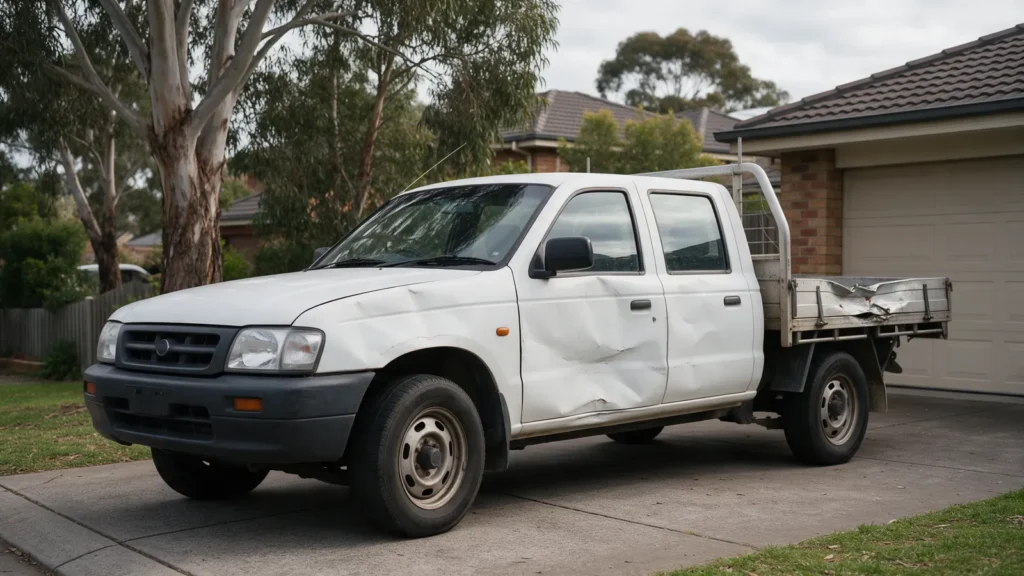
You can sell a damaged ute in Melbourne to a wrecker in almost any condition: crashed, flooded, high-kilometre, seized or simply worn out. Wreckers usually offer more for a damaged ute than for a damaged sedan of similar age, because ute parts stay in demand long after the vehicle stops running. The offer depends on the model, the engine, which parts survived, and how hard the vehicle is to collect.
Light trucks follow the same logic with one extra step: the wrecker needs to know the vehicle’s size and weight before pickup. Business and fleet owners have a little more paperwork, because a company cannot finish a transfer the way a private seller can. Get those details right and the sale goes smoothly, with payment made by bank transfer once the paperwork checks out.
Why Damaged Utes Are Worth More to Wreckers Than Most Cars
A wrecker values a vehicle in two ways: the parts it can resell and the metal left over. Utes and 4x4s score well on both.
Start with demand. Australians bought 235,614 new utes in 2025, and 212,513 of them were 4×4 models, according to RACV’s summary of official VFACTS figures. The Ford Ranger, Toyota HiLux and Isuzu D-Max led the segment, with the Mitsubishi Triton close behind. Every one of those utes will eventually need a used gearbox, a tailgate or a replacement tray. That steady parts market is why a non-running HiLux or Ranger rarely ends up valued only as scrap.
Then there is weight. A dual-cab ute with a steel tray, tow bar and bull bar carries far more steel than a small hatchback. Even after the best parts come off, the remaining shell has real recycling value. Our scrap metal prices guide explains how metal markets move and why rates change from week to week.
Finally, utes are built to be repaired. Workshops, fleet operators and weekend four-wheel drivers keep older models running for years, so even a 15-year-old Navara can supply parts that someone is actively searching for.
The Parts That Drive Your Ute’s Value
When a wrecker assesses a damaged ute, they look past the dents and ask one question: what can be recovered and resold? These components carry the most weight in that assessment.
- Diesel engine and turbo. A complete, running diesel is often the single most valuable item. Low-kilometre engines from popular models find buyers readily.
- Transmission and transfer case. A working gearbox and a healthy 4WD transfer case are in steady demand, especially for models with known weak points in these parts.
- Diffs and axles. Front and rear differentials, axle assemblies and locking diffs come off and sell separately.
- Injectors, DPF and engine electronics. Common rail injectors, the diesel particulate filter on newer models, and the engine control unit can be worth recovering when they test well.
- Tray, tub and tailgate. Steel and aluminium trays, undamaged tubs and tailgates are often replaced after minor collisions, so good ones sell.
- Accessories. Bull bars, canopies, tool boxes, roof racks, tow bars, winches, long-range tanks and suspension lifts can lift an offer. Mention every one when you ask for a quote.
- Panels, lights and interior. Doors, guards, headlights, seats and dash parts round out the assessment, provided they escaped the damage.
Where the damage sits matters more than how bad it looks. A ute with a crushed rear tray but a sound engine and gearbox can be worth more than a clean-bodied ute with a seized motor. If you want a broader view of how price factors combine, read our guide on how much wreckers pay for cars in Melbourne.
What Lowers an Offer on a Damaged 4×4
Some problems reduce what a wrecker can recover, and it helps to know them before you ask for a quote.
- Flood or saltwater damage. Water in the engine, transmission and wiring can write off the parts that usually carry the value. Beach launches and river crossings cause this more often than people expect.
- Fire damage. Heat ruins wiring, rubber, plastics and often the engine. A burnt ute is usually valued close to its metal weight.
- Chassis damage or heavy rust. A bent or rusted chassis does not stop parts recovery, but it limits what else can be done with the vehicle.
- Missing parts. If the engine, turbo, wheels or tray have already been removed, the offer reflects what is left.
- Hard collection. A ute stuck in a paddock, a tight laneway or an underground car park takes more time and equipment to recover.
A written-off ute can still sell to a wrecker, though the rules for repairable and statutory write-offs differ. Our guide on what to do with a written-off car in Victoria covers the Written-Off Vehicle Register and what each category means for you.
Selling a Damaged Light Truck: What Changes
Light trucks such as the Isuzu NPR, Hino 300 series, Mitsubishi Fuso Canter and Toyota Dyna sit in a different class from utes. Many of them weigh more than a car licence allows.
In Victoria, you need a heavy vehicle licence to drive any truck with a gross vehicle mass (GVM) over 4.5 tonnes, and a Light Rigid (LR) licence covers vehicles over 4.5 tonnes and up to 8 tonnes GVM, according to Transport Victoria’s licence categories. That GVM figure also tells a wrecker what equipment they need to send. A standard tilt tray suited to a sedan may not suit a loaded tipper or a pantech.
When you ask for a quote on a light truck, have these details ready:
- make, model, year and GVM (printed on the compliance or build plate)
- body type: tray, tipper, pantech, refrigerated box, crane body or cab chassis
- whether it rolls, steers and brakes
- what is still on board, such as tool boxes, tail lifts or refrigeration units
- where it sits and how much room there is to load it
Truck parts follow the same rules as ute parts. Engines, gearboxes, diffs, cab panels and tail lifts all hold value, and refrigeration or crane units can be significant. Our ute and truck wrecking service handles utes, 4x4s and light commercial vehicles across south-east Melbourne.
Business and Fleet Ute Disposal
Tradies, builders, councils, hire companies and delivery operators often have more than one damaged or worn-out ute to move on. Fleet disposal works the same way as a single sale, with a few checks that protect the business.
Check who actually owns each vehicle
Many fleet utes are leased rather than owned outright. Under a finance or lease arrangement, the financier may have a registered interest in the vehicle. Run a check on each VIN through the Personal Property Securities Register before you sell. A PPSR search costs $2 and shows any registered finance interest, plus written-off and stolen status. If money is still owed, the financier needs to be paid out or release its interest first.
Gather records for every unit
For each vehicle, collect the registration details, the VIN, service history if you have it, and the keys. Note any accessories that belong to the business and that you want to keep, such as canopies, racking or GPS trackers. Remove company signage, fuel cards, e-tags and toll devices before collection.
Talk to your accountant
Selling a business asset can affect depreciation records and GST reporting. Your accountant can tell you how to record the sale. Ask for a written receipt for every vehicle so the numbers match.
Batch the pickups
Grouping several vehicles into one collection saves the business time. Tell the wrecker how many units there are, where each one sits, and which ones still drive.
VicRoads Rules When a Company Sells a Ute
This is the step most sellers overlook, and it differs from a private sale.
VicRoads says that a company or organisation cannot complete a transfer online through the myVicRoads business account. The company needs to visit a VicRoads Customer Service Centre to finalise the transfer. The person lodging it must bring evidence of identity.
The VicRoads company transfer rules also set out what a standard transfer to or from a company needs:
- a completed vehicle transfer form signed by both parties, including a person eligible to sign for the company (such as a director)
- the full name and customer number of the person lodging the transfer
- the company’s VicRoads customer number
- a current, original roadworthy certificate issued no more than 30 days before the transfer
- the transfer fee and motor vehicle duty
The company process relies on an ACN or ARBN. VicRoads states that this process does not apply to businesses with an ABN, so check with VicRoads if your business has no ACN. If the company has no VicRoads customer number, it must visit a Customer Service Centre with full evidence of identity for the company. Companies in liquidation, administration or receivership need extra documents, including the liquidator’s notice of appointment.
Why the roadworthy rule matters less for a wrecker sale
The roadworthy requirement applies when registration moves to a new owner. When a damaged ute goes to a wrecker, the more common path is to cancel the registration instead. VicRoads accepts a wrecker’s receipt as evidence when you cancel, and you may get a refund for unused registration, less a processing fee and part of the TAC charge. Number plates no longer need to be returned.
If the ute stays registered and you sell it as a registered vehicle, a seller still has 14 days to tell VicRoads through a notice of disposal. Skipping that step can leave the seller liable for fines and tolls linked to the vehicle. For private sellers, our guide to documents needed to sell a car to wreckers in Victoria lists everything to have ready on pickup day.
How Payment and Collection Work in Victoria
Victoria banned cash payments for scrap metal and for vehicles bought as scrap from 30 May 2018. Under the Second-Hand Dealers and Pawnbrokers Act 1989, licensed dealers must pay by electronic funds transfer or non-transferable cheque. They must also record the seller’s identity and the vehicle’s VIN. Consumer Affairs Victoria explains the rules in full. Any buyer offering cash in hand for a scrap ute is operating outside the law.
For a business, EFT payment is a benefit. It leaves a clean paper trail for the books and links each payment to a specific VIN.
Collection depends on where the vehicle is. We collect broken-down, damaged and unregistered utes from homes, worksites, depots, holding yards and roadside breakdowns. We do not attend accident scenes. In Melbourne, accident towing is licensed and allocated through a roster, so the allocated tow operator moves the vehicle first. Once it sits at a holding yard or your home, you can arrange its sale. Our car removal service explains what happens on collection day.
After collection, licensed recyclers must depollute vehicles before crushing. That means draining fuel, oil, coolant and brake fluid, and removing batteries and other hazardous parts, under EPA Victoria’s guideline for auto recyclers. Utes hold large volumes of diesel and oil, so proper handling matters.
Frequently Asked Questions
Can I sell a ute that doesn’t run?
Yes. Wreckers buy non-running utes because value comes from the parts and metal, not from driving. A seized engine lowers the offer, but the gearbox, diffs, tray and panels can still carry value.
Do I need a roadworthy certificate to sell a damaged ute to a wrecker?
Usually not, if the registration is cancelled before or at the sale. A roadworthy is required when a registered vehicle transfers to a new owner, so check your situation before pickup. Our guide on selling a car without a roadworthy in Victoria covers the options.
Can a wrecker buy a ute that still has finance owing?
Only once the finance is dealt with. Run a PPSR check on the VIN first. If a financier has a registered interest, it must be paid out or released before the ute can be sold.
Is a damaged ute worth more than a damaged car?
Often, yes. Strong demand for ute parts and the extra steel in utes and 4x4s usually lift the offer compared with a similar-age sedan. The final figure still depends on the model, the damage and which parts survived.
Getting the Best Result From Your Damaged Ute
A damaged ute is rarely just scrap. Its engine, drivetrain, tray and accessories are worth something to the people keeping similar vehicles on the road, and a clear description of those parts gets you a more accurate quote. Businesses that check each VIN for finance, gather records and plan the VicRoads step at a Customer Service Centre can clear a whole fleet without loose ends.
Wreckers Dandenong collects utes, 4x4s and light trucks from Dandenong, Noble Park, Springvale, Keysborough, Clayton, Mulgrave, Hallam and Berwick, Monday to Friday 7AM to 6PM and Saturday 8AM to 2PM. See how our ute and truck wrecking service assesses damaged work vehicles, or request a quote for your damaged ute or fleet on 04 9382 5076.