
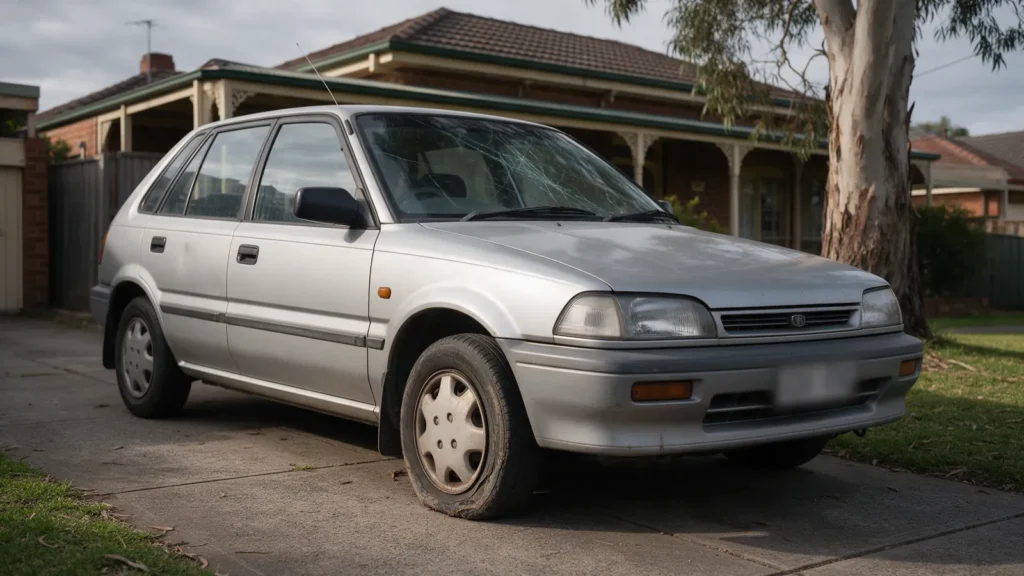
Yes, you can sell a car without a roadworthy in Victoria, but only through certain legal routes. A registered car sold privately to another person must come with a current roadworthy certificate. If you sell to a licensed dealer, sell the car unregistered, or transfer it to a spouse or domestic partner, the certificate is not required.
That makes the real question less about whether you can sell and more about which route suits your car. A car that would pass with minor work is often worth certifying. A car that needs major safety repairs usually makes more sense sold as-is, either unregistered to a private buyer or to a business that buys cars in any condition.
What Victorian law says about roadworthy certificates when you sell
The rule comes from section 42A of the Motor Car Traders Act 1986, headed “All registered cars must be sold with a roadworthy certificate”. It says a person must not sell a car registered under the Road Safety Act 1986 unless they give the buyer a current certificate of roadworthiness. “Current” means issued within the last 30 days. The maximum penalty is 50 penalty units.
A second rule sits in the Road Safety (Vehicles) Regulations 2021. Regulation 89 says a person who disposes of a registered vehicle must give the buyer a completed transfer application and a current roadworthy certificate, unless an exemption applies.
Transport Victoria describes a roadworthy certificate (RWC) as proof that a vehicle is “safe enough to be used on public roads”. You need one when selling a car, re-registering it, or clearing some defect notices. Only a licensed vehicle tester can issue it.
Three details matter for sellers:
- The rule is tied to registration. It applies to registered cars. A car whose rego has expired and was not renewed on or before the day of sale falls outside section 42A.
- Suspended rego still counts as registered. The Act states that a car with suspended registration is treated as registered for this rule.
- The 30-day clock is strict. An RWC can be used more than once within 30 days of issue, but an older certificate is not current.
The legal ways to sell a car without a roadworthy
VicRoads publishes a table showing which transfer types need an RWC. For a private to private sale, an RWC is needed. Several other transfer types do not need one. Here are the routes that apply to most owners.
1. Sell to a licensed motor car trader
Section 42A does not apply when the buyer is a licensed motor car trader (LMCT) or a special trader. The VicRoads table lists “Private to dealer” as not needing an RWC. The dealer also manages the transfer paperwork.
Expect the offer to reflect the repairs the trader will need to do before resale. A trader is pricing in the roadworthy work you skipped.
2. Sell the car unregistered
Because the law targets registered cars, selling unregistered is the standard private route. You either let the rego lapse or cancel it before the sale. The buyer then needs their own RWC to register it, and cannot drive it on the road unregistered without a permit.
The process for cancelling rego, claiming a refund and handing over an unregistered car has its own steps. We cover them in detail in our guide to selling an unregistered car.
3. Sell at public auction
Section 42A does not apply to a car sold at public auction by someone acting on behalf of the owner. This suits owners who want an auction house to handle the sale.
4. Transfer to a spouse or domestic partner
VicRoads lists transfers to a current or former spouse or domestic partner as not needing an RWC. Certain deceased estate transfers are also exempt.
Vehicle types that never need an RWC
Some vehicles are exempt regardless of who buys them. VicRoads lists brand new vehicles never registered anywhere, light trailers, recreational motorcycles, and specially constructed vehicles such as forklifts and tractors. Standard passenger cars, utes and vans are not on that list.
Roadworthy myths that cause problems for sellers
Several common beliefs about selling without an RWC are wrong. Each one can leave a seller exposed.
“I’ll write ‘sold as-is, no RWC’ on the receipt.” A note on the receipt does not change the law. If the car is registered and the buyer is a private person, the seller must supply a current RWC. The buyer cannot sign that obligation away.
“Selling to family is exempt.” It is not. The VicRoads table lists “Family member” transfers as needing an RWC, plus the transfer fee and motor vehicle duty. Only spouse and domestic partner transfers are exempt.
“The buyer can get the roadworthy after the sale.” For a registered car, the buyer must lodge evidence of a current RWC with the transfer. If you hand over a registered car without one, the transfer can stall. The car may stay in your name, along with any tolls or fines linked to it.
“My rego is suspended, so the car counts as unregistered.” The Act treats suspended registration as registered for this rule. Only expired rego that was not renewed by the sale date, or cancelled rego, takes the car outside section 42A.
When your car would fail: is the roadworthy worth chasing?
Before you decide how to sell, work out what a roadworthy would involve. Transport Victoria lists what the inspection covers:
- wheels and tyres
- steering, suspension and brakes
- seats and seatbelts
- lights and reflectors
- windscreen, windows, front wipers and washers
- vehicle structure
- other safety items on the body, chassis or engine
The RWC does not check mechanical reliability, air conditioning, electric windows or general wear. A car with a tired engine can pass. A car that runs well but has a rust-damaged sill or a cracked windscreen in the driver’s view may fail.
If the car fails, the tester gives you a report listing the issues. VicRoads says that if the car is reinspected within 14 days, you won’t need to pay the full fee again. Miss that window and you start over. The cost of the certificate itself depends on the car’s age, type and condition, so ask your tester for a quote first.
Use these questions to decide:
- What does the failure report say? Worn tyres or a blown globe are routine fixes. Structural rust, brake system faults or airbag warnings can cost far more.
- What is the car worth with an RWC versus without? Compare the likely private sale price with a certificate against the as-is value. If the repair bill eats most of the difference, certifying gains you little.
- Can you finish within 14 days? Parts delays for older models can push you past the reinspection window.
- Is the car drivable at all? A car with a dead engine or gearbox will need towing to the tester, which adds cost before any repairs start.
If the repairs make little financial sense, selling the car as-is is usually the better path.
Selling a car without a roadworthy to a wrecker
A wrecker buys a car for its parts and metal, not to put it back on the road. Paint, cosmetic damage and failed safety items do not stop the sale. This makes a wrecker a practical buyer for a car that would cost too much to certify.
The paperwork depends on the buyer’s licensing and the car’s rego status. Work through it in this order.
Ask whether the buyer holds an LMCT licence
If the wrecker holds an LMCT licence, the private-to-dealer exemption applies. You can sell the car while it is still registered and complete a notice of disposal. VicRoads requires sellers to submit the notice within 14 days, and the easiest way is through a myVicRoads account.
If the buyer does not hold an LMCT licence, sell the car unregistered. Do not assume either way. Ask the question when you get a quote.
Cancel the rego if the car will never return to the road
For a car going to parts and scrap, cancelling the registration is often the cleanest option. You can cancel your registration for a refund of unused time. VicRoads accepts a wrecker’s receipt as evidence that the car has been wrecked. A a processing fee and 10% of the TAC charge are deducted from the refund. Number plates no longer need to be returned.
Know how you will be paid
Victoria has banned cash payments for scrap metal and vehicles bought as scrap since 30 May 2018. A wrecker buying your car for scrap must pay by electronic funds transfer or non-transferable cheque. They must also record your identity and the vehicle identification number (VIN). The payment lands in your bank account rather than your hand.
Arrange collection rather than driving it
A car that would fail a roadworthy may not be safe to drive, and an unregistered car cannot be driven on the road without a permit. Booking a car removal service means the car is collected from your driveway, workplace or holding yard on a tow truck.
For the full list of what to have ready on collection day, including ID and proof of ownership, see our checklist of documents needed to sell a car to wreckers.
Selling privately without an RWC: protect yourself
If you sell unregistered to a private buyer, a few habits reduce the risk of disputes later.
- Describe the car honestly. State in the ad and the receipt that the car is unregistered and sold without an RWC. List known faults.
- Write a dated receipt. Include both parties’ names, the price, the VIN and the date and time of handover. Both sign and keep a copy.
- Run a PPSR search on your own car. If you have any doubt about finance, a search on the Personal Property Securities Register costs $2. A buyer will often run one too.
- Do not let the buyer drive it away. An unregistered car needs an unregistered vehicle permit or a tow. Leave that responsibility with the buyer, in writing.
Frequently asked questions
Is it illegal to sell a registered car without a roadworthy in Victoria?
Yes, if the buyer is a private person and no exemption applies. Section 42A of the Motor Car Traders Act 1986 carries a maximum penalty of 50 penalty units. The rule does not apply when the buyer is a licensed motor car trader, when the car is sold at public auction, or when the car is unregistered.
How long is a roadworthy certificate valid in Victoria?
An RWC is current for 30 days from the date it is issued. Within that period it can be used more than once for registration or transfer. After 30 days you need a new inspection.
Can I sell my car to a family member without a roadworthy?
No. VicRoads lists family member transfers as needing an RWC, the transfer fee and motor vehicle duty. Transfers to a current or former spouse or domestic partner are the exception and do not need an RWC.
Do wreckers need a roadworthy certificate to buy my car?
A licensed motor car trader does not need an RWC from you. If the wrecker is not an LMCT, the usual approach is to sell the car unregistered by letting the rego lapse or cancelling it. A wrecker’s receipt is accepted by VicRoads as evidence when you cancel the rego for a refund.
Choosing the right route for your car
The law draws a clear line. A registered car sold privately needs a current RWC. Dealer sales, unregistered sales, public auctions and spouse transfers do not. Check your rego status, get a failure report if you are unsure what the car needs, and compare the repair bill with what the car is worth as-is.
If your car would fail its roadworthy and the repairs no longer add up, see how our Cash for Cars service buys unwanted cars in Dandenong and south-east Melbourne with payment by EFT, or request a quote for your car without a roadworthy on 04 9382 5076.